
Virtual reality is like stepping into a sci-fi movie where you’re the star, and the popcorn is superfluous! Imagine donning a headset that transports you to fantastical realms where dragons roar and classrooms turn into time machines. This technology is not just for gamers; it’s an educational powerhouse, ready to blast the boring out of learning and engage students like never before.
Buckle up; we’re diving into the mind-bending world of virtual reality!
From the realm of video games that make your heart race to classrooms that let you explore the solar system without leaving your desk, VR is shaking things up. It’s like having a magic carpet that takes you anywhere and everywhere, enhancing every experience along the way. We’ll explore how this tech affects gaming culture, revolutionizes education, and even warns us about lurking digital gremlins in our devices.
Are you ready to geek out over virtual reality?
Virtual Reality in Gaming
The evolution of virtual reality (VR) technology in the gaming industry has been nothing short of a roller coaster ride—minus the nausea and long lines. From clunky, monochrome displays that made players feel like they were gaming inside a microwave, to sleek headsets that transport users right into pixelated realms, VR has undergone a metamorphosis worthy of a sci-fi film.
Today’s players can enjoy immersive experiences that blur the lines between reality and fantasy, making every gaming session feel like a blockbuster adventure.Virtual reality enhances player immersion and engagement by providing worlds that players can not only see but interact with in a natural and intuitive way. With motion tracking, 360-degree views, and haptic feedback, players can swing swords, explore alien landscapes, or even dance with virtual avatars as if they were right there in the room.
This technology transforms gameplay into an experience that stimulates not just vision but the entire body and mind, leading to deeper emotional connections with the game narrative and characters. As players step into these virtual realms, they can forget the mundane and embrace the extraordinary.
Popular VR Games and Their Impact on Gaming Culture
The impact of VR gaming is palpable, with several titles leading the charge in making virtual adventures a staple in gaming culture. These games have not only pushed the boundaries of technology but also reshaped how we think about play. Below are some shining examples of VR games that have changed the landscape:
- Beat Saber: This rhythm game combines music and lightsaber battles, allowing players to slash through blocks in time with the beat. It has inspired countless memes and even real-life dance challenges, proving that VR can make anyone feel like a Jedi master on a dance floor.
- Half-Life: Alyx: A prequel to the beloved Half-Life series, this game has been hailed as a VR masterpiece, elevating storytelling and gameplay in virtual environments. Players must solve puzzles and battle against terrifying foes, all while feeling the weight of every gun and the thrill of every jump scare.
- VRChat: Not just a game, VRChat is a social platform that allows users to create and explore worlds while interacting with others. It showcases the social potential of VR, where friendships are formed, and awkward moments are guaranteed—often leading to hilarious outcomes.
- Boneworks: With its physics-driven gameplay, Boneworks lets players manipulate the environment in ways that often lead to comedic and chaotic results. A simple task can turn into a slapstick routine, proving that physics can be just as entertaining as combat.
These examples illustrate the diverse avenues VR gaming explores, from music and narrative to social interactions. As VR technology continues to advance, it opens up even more creative possibilities for developers and players alike. The boundaries of gaming are constantly shifting, and with VR, the future looks like a pixelated utopia where anything is possible—except maybe using the bathroom without taking off the headset.
Virtual Reality Applications in Education
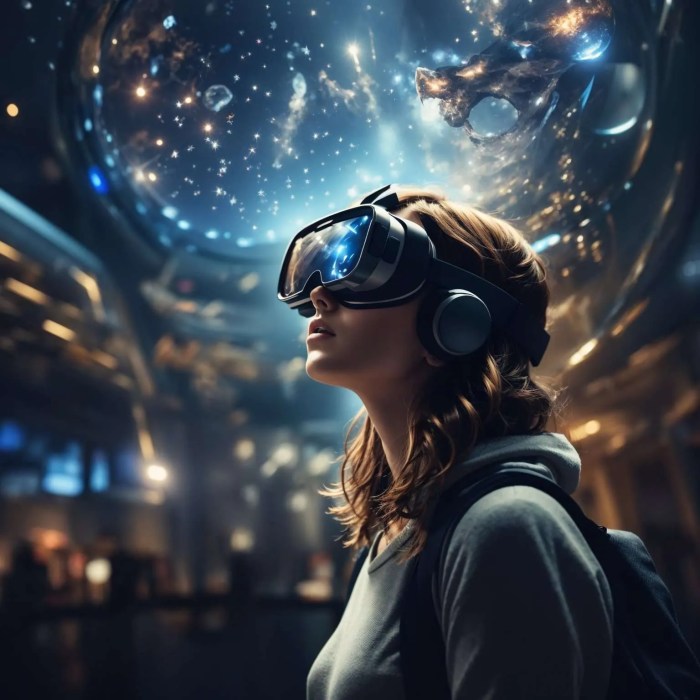
Imagine stepping into a world where textbooks come to life and classroom walls disappear! Virtual Reality (VR) in education is not just a futuristic fantasy; it’s a transformative tool that allows students to explore, engage, and experience learning like never before. By immersing learners in interactive environments, VR can enhance understanding, retention, and even spark creativity.The benefits of utilizing VR in educational settings are as vast as the universe itself! Students can embark on virtual field trips to historical sites, dive deep into the ocean to study marine life, or even travel through the human body to learn anatomy.
This immersive technology elevates the learning experience, making education not just informative, but also thrilling!
Subjects Enhanced Through VR Experiences
The incorporation of VR in education can elevate numerous subjects, turning mundane lessons into exhilarating adventures. The following subjects can greatly benefit from VR integration:
- History: Students can witness historical events unfold before their eyes, making the past feel more alive and tangible.
- Science: From exploring the solar system to dissecting virtual organisms, science lessons become interactive and engaging.
- Mathematics: Visualization of complex concepts like geometry or calculus through 3D models can clarify confusing topics.
- Language Arts: Immersive storytelling environments can enhance literacy skills and encourage creative writing.
- Geography: Virtual globes allow students to explore different cultures and landscapes without ever leaving the classroom.
- Art: Students can create in 3D spaces, exploring new forms of artistic expression and techniques.
- Medicine: Medical students can practice surgeries and procedures in a risk-free environment, enhancing their skills and confidence.
- Physical Education: VR can simulate sports environments and scenarios, encouraging healthy competition and teamwork.
The excitement surrounding these applications is not mere speculation; there are institutions successfully implementing VR into their curricula with outstanding results.
Case Studies of Successful VR Implementations
Several educational institutions have embraced VR technology, witnessing remarkable transformations in student engagement and learning outcomes. Here are a few noteworthy examples:
| Institution | VR Application | Outcome |
|---|---|---|
| University of Illinois | Virtual Reality Anatomy Lab | Students showed a 30% increase in retention of anatomical structures compared to traditional methods. |
| Stanford University | Virtual Reality History Course | Enhanced historical empathy and retention; students reported feeling more connected to events. |
| Northwestern University | VR Language Immersion Programs | Improved language acquisition rates by over 40% due to contextual learning experiences. |
| Carnegie Mellon University | VR in Robotics Classes | Students developed a deeper understanding of robot programming through interactive simulations. |
“Virtual Reality in education is not just a tool; it’s a passport to exploration and discovery!”
The Impact of Virtual Reality on Computers and Technology
Virtual Reality (VR) is not just a fancy buzzword; it’s a game-changer that has put the pedal to the metal in the world of technology. As we dive into the impact of VR on computers and technology, we’ll discover how this immersive experience has compelled advancements that are reshaping our digital landscape. Spoiler alert: it’s not just about some cool headsets and glowing avatars!Technological advancements have created a fertile ground for the growth of VR.
From rapid developments in graphics processors to the advent of high-speed internet, these innovations form the backbone of a visceral virtual experience. Companies are now racing to create smoother and more realistic simulations, leading to hardware improvements that were once the stuff of sci-fi novels.
Technological Advancements in VR Development
Key technologies have propelled VR development into the fast lane. The following highlights showcase the crucial players in this digital evolution:
- Graphics Processing Units (GPUs): The rise of powerful GPUs has transformed the visual quality of VR, allowing for lifelike graphics that can make you forget you’re not in a different universe.
- Motion Tracking Sensors: These devices have enhanced user interaction within VR environments, enabling movements to be mirrored with uncanny precision. It’s like your avatar has suddenly learned how to dance!
- Cloud Computing: This technology has facilitated the streaming of heavy VR experiences, eliminating the need for users to have high-end hardware. It’s as if VR is building its very own digital cloud, ready to rain immersive experiences!
- Artificial Intelligence (AI): AI plays a pivotal role in creating intelligent, responsive virtual environments, where NPCs (non-playable characters) might just hold a more engaging conversation than your last Tinder date.
Intersection of VR with Mobile Computing and Personal Tech
VR isn’t just strutting down the computer aisle; it’s cozying up to mobile computing and personal tech like they’re old friends at a coffee shop. The integration of VR with smartphones and wearables has been a game-changer, making virtual adventures more accessible than ever. Mobile VR headsets, such as the Oculus Quest, have enabled users to experience immersive content without being tethered to a powerful PC.
This accessibility is reshaping entertainment, education, and even social interactions.Moreover, the rise of augmented reality (AR) within VR environments has opened new doors for personal tech. For instance, imagine walking in your neighborhood while a virtual assistant gives you directions or highlights points of interest—like that trendy café that serves avocado toast in the shape of a unicorn!
Potential Threats in VR Environments
With great power comes great responsibility, and VR is no exception. While the technology dazzles and delights, it also presents potential threats that users should be aware of. The dark side of VR includes risks such as spyware and viruses that can invade the vibrant virtual worlds we’ve come to love.The allure of immersive experiences is sometimes accompanied by malicious software hopping aboard the VR train.
Here are some potential threats that need your attention:
- Spyware: Malicious entities can create spyware that tracks users’ movements and interactions within VR environments, leading to a creepy level of surveillance. Think of it as someone peeking into your VR life, taking notes on your digital escapades.
- Data Breaches: VR platforms often require personal information to tailor experiences. If these platforms aren’t secure, they can become prime targets for hackers, turning your virtual dream into a data nightmare.
- Malware: Just like any other software, VR applications can be infected with malware that disrupts the experience or steals sensitive information. It’s like inviting a virus to your virtual dinner party—unpleasant and unwelcome!
“Virtual reality is the perfect combination of technology and imagination, but let’s not forget to keep our digital doors locked!”
Final Wrap-Up
In conclusion, virtual reality is not just a buzzword; it’s a transformative force that’s changing how we play, learn, and interact with technology. Whether you’re slaying dragons in a virtual dungeon or swimming with whales in a classroom, VR is here to stay and has the potential to make every experience unforgettable. So, strap on those headsets and get ready for a wild ride into the future!
FAQ Explained
What devices do I need for virtual reality?
You’ll need a VR headset, which can range from high-end options like the Oculus Quest to more affordable mobile options like Google Cardboard. A compatible gaming console or PC might also be required for some systems.
Can virtual reality be used for therapy?
Absolutely! VR is being used in various therapeutic settings, particularly for treating phobias, PTSD, and anxiety, by simulating environments that help patients confront and manage their fears in a controlled space.
Is virtual reality safe for kids?
While VR can be safe, it’s essential to monitor usage. Experts recommend limiting screen time and ensuring the content is age-appropriate to prevent any adverse effects.
What is the future of virtual reality?
The future looks bright! With advancements in technology, we can expect even more immersive experiences, better graphics, and applications in various fields like medicine, architecture, and beyond.
Can I create my own virtual reality content?
Yes, many platforms allow you to create VR content, from simple 360-degree videos to complex interactive experiences, making it accessible for aspiring virtual creators!


